

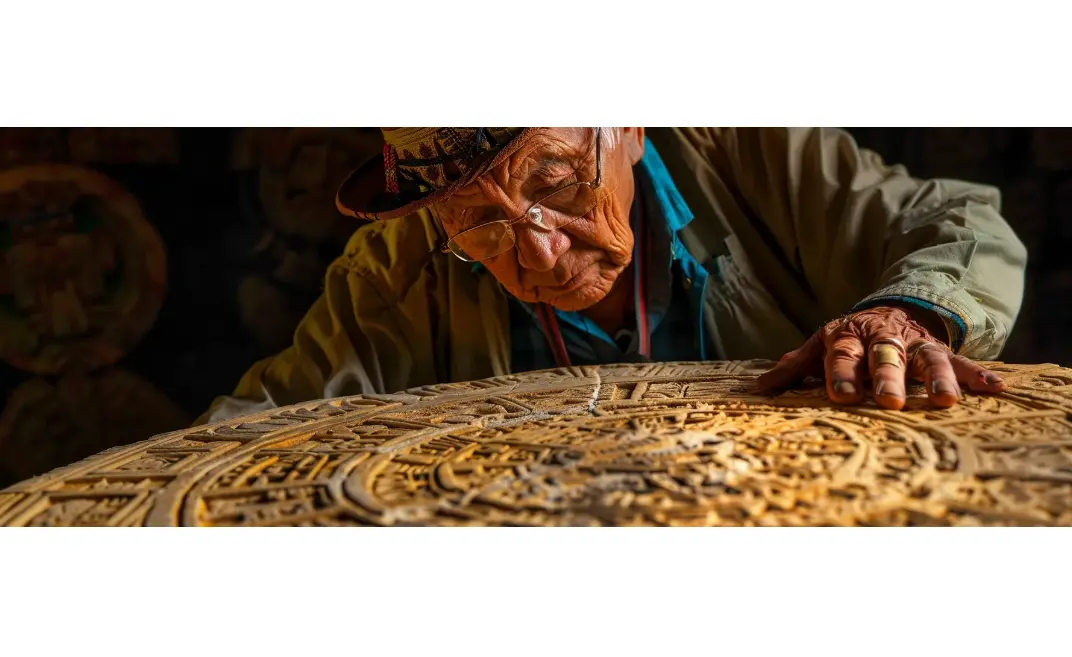
The Mayan calendar, an intricate system of timekeeping developed by the ancient Mayan civilization, has long intrigued scholars and enthusiasts alike. This complex calendar combines cycles of time to mark religious and ceremonial events, and in modern times, it has found a unique place in the study of astrology. Understanding this ancient system provides an enriching context for the astrological insights of today, offering an alternative perspective to mainstream zodiac signs and planetary movements. In this article, we delve into the depths of Mayan cosmology and explore its contributions to contemporary astrological practice.
Understanding the Mayan Calendar: A Brief Overview
The Mayan calendar is often associated with the mystique of an ancient civilization that had an incredibly sophisticated understanding of time. Its structure is composed of multiple calendar cycles that interlock to map out vast spans of time, far beyond the yearly cycles we are accustomed to in the Gregorian calendar. The most commonly known cycles are the Tzolk’in, a 260-day ritual calendar, and the Haab’, a 365-day solar calendar.
The Tzolk’in calendar represents a spiritual cycle that guides the daily life of the Mayans. It is made up of 20 day signs and 13 numbers, which rotate to create 260 unique days, believed to affect individuals’ destinies and personalities. Meanwhile, the Haab’ functions similarly to our solar year, but with a different organization of months and a concept known as the “Wayeb,” a short period of the year that was considered a time of reflection and dangerous omens.
This ancient Mesoamerican culture’s calendrical system is intricately tied to its worldview and religious beliefs. The calendar is thought to influence individual and collective destinies, making its study a potent source for astrological interpretation. The sacred Tzolk’in especially serves as the bedrock for Mayan calendar astrology, linking each day with a specific energy or k’atun that influences spiritual life.
Integrating Mayan Astrological Principles Into Contemporary Horoscopes

As astrology broadens its scope to include multicultural perspectives, the place of Mayan astrological principles in contemporary horoscopes becomes increasingly significant. The integration of this ancient system challenges the conventional framework of Western astrology, offering fresh readings that resonate with those seeking a different spiritual connection. The day signs and numbers of the Tzolk’in, when combined with Western planetary movements and aspects, can provide a nuanced forecast that speaks to the soul on a profound level.
For instance, astrological services have begun to offer personalized horoscopes that factor in an individual’s Mayan birth sign alongside their zodiac sign. This fusion allows for a composite insight into the person’s temperament, likely challenges, and growth potential. It is a tapestry woven from threads of ancient wisdom and contemporary knowledge, creating a rich and varied portrayal of one’s astrological identity.
The universal themes that are a part of Mayan astrological tradition, such as the constant cycle of death and rebirth and the natural balance of the universe, also resonate deeply in today’s quest for harmony and understanding. Those who turn to astrology for guidance and self-awareness find such concepts appealing, as they search for meaning and connection in an often chaotic and disconnected modern world.
Exploring the Symbiotic Relationship Between Mayan Astronomy and Astrology
The integration of Mayan astronomical knowledge into astrology demonstrates a symbiotic relationship where science and spirituality merge. The Mayans’ meticulous observation of celestial bodies and their movements formed the backbone of their calendrical system. They noted the cycles of the Moon, the rise and set patterns of Venus, and other planetary movements, which are all considered influential in astrology today. Mayan astronomy was not just a scientific endeavor but a spiritual one as well, with astronomical cycles informing their religious ceremonies and mythologies.
This holistic approach to understanding the cosmos is reflected in the manner in which contemporary astrologers draw on Mayan insights. The precise astronomical observations made by the Mayans are utilized to augment the astrological narrative, contributing to a more complete and enriching interpretation of astral influences. It reminds us that the study of the heavens has always been multi-dimensional, incorporating both the calculable and the mystical.
Altogether, the Mayan calendar’s role in modern astrology is significant, providing a venerable framework that enriches our understanding of time and cosmic cycles. Overall, by weaving the threads of Mayan astronomical expertise and their calendar’s philosophical underpinnings into contemporary astrological practices, we connect with a tradition that views the universe as an integrated, living entity where each moment is spiritually significant.